Health-related care can involve detailed plans, specialist skills and decisions about safety. Our support services help NDIS participants and private clients, along with their families and providers, understand what’s needed and put it into practice at home and in the community.
We assess disability-related health needs and develop guidance that reflects the participant’s circumstances. This includes identifying clinical risks, planning everyday care and reviewing recommendations when things change. Our assessments consider the person’s goals, environment and existing supports.
A comprehensive assessment of disability-related health needs and clinical risks, with recommendations to guide the participant’s care and support arrangements.
Health support and clinical care plans that explain the participant’s requirements and give families and support workers practical steps to follow.
Assessment and guidance for participants receiving nutrition through a feeding tube, helping their team understand the clinical requirements of their daily care.
A fresh review when a participant’s health needs change, to identify what needs updating in their care plans and support arrangements.
Continued clinical input where required, helping participants and their teams keep care recommendations relevant as needs and circumstances develop.
Some health needs require specific nursing skills and regular attention. We provide clinical support for gastrostomy care, diabetes and continence management, taking account of the participant’s care plan, preferences and daily routines.
Clinical care and management of gastrostomy tubes, with guidance to help the participant’s support team understand their individual care requirements.
In-home routine gastrostomy tube changes, subject to clinical assessment and suitability, allowing eligible participants to receive this care in familiar surroundings.
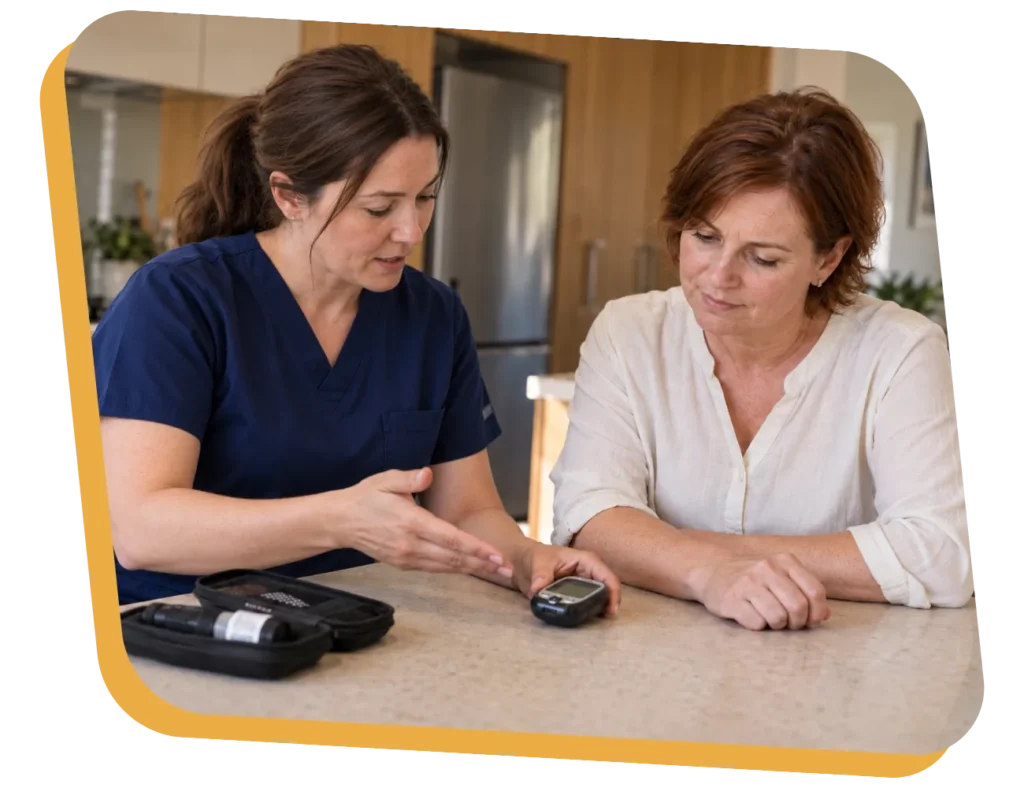
Clinical guidance for disability-related diabetes care, helping participants and support teams understand and follow the person’s individual management requirements.
Support with medication management and injections, including clinical assessment and guidance to help individuals manage their medications safely and confidently as part of their daily routine.
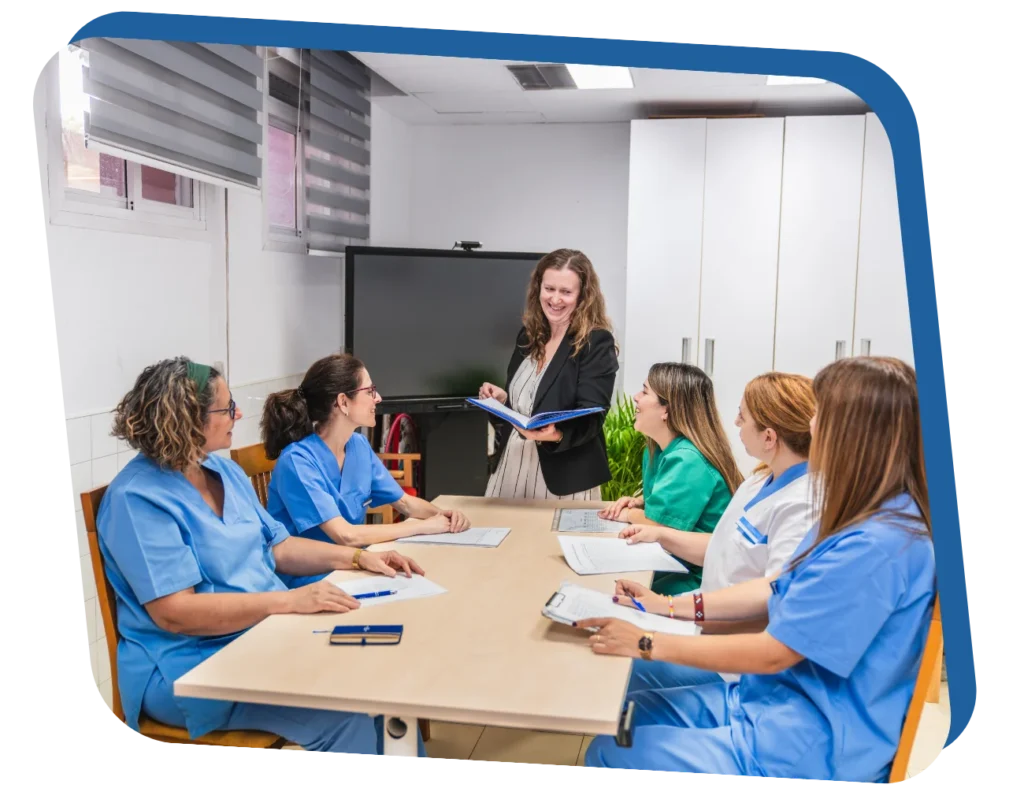
Our training connects clinical instructions with the tasks support workers carry out each day. We provide participant-specific education, assess competency and arrange clinical delegation where appropriate, helping teams understand their responsibilities and the care they are expected to deliver.
Education to help support workers understand the participant’s seizure management plan, recognise relevant signs and follow the agreed response procedures.
Participant-specific training to help support workers understand medication-related care requirements and their responsibilities within the agreed support arrangements.
Practical explanations of the participant’s health needs and care procedures, with opportunities for support workers to ask questions and clarify instructions.
Assessment of a support worker’s knowledge and ability to carry out specific health-related tasks, identifying where further instruction or practice is needed.
Assessment and delegation of suitable health-related care tasks to support workers, with clear instructions about the task, responsibilities and clinical oversight.
The right clinical input can help everyday care run more smoothly and give your team a shared understanding of what matters. Talk to us about support services that fit your health needs and goals.